
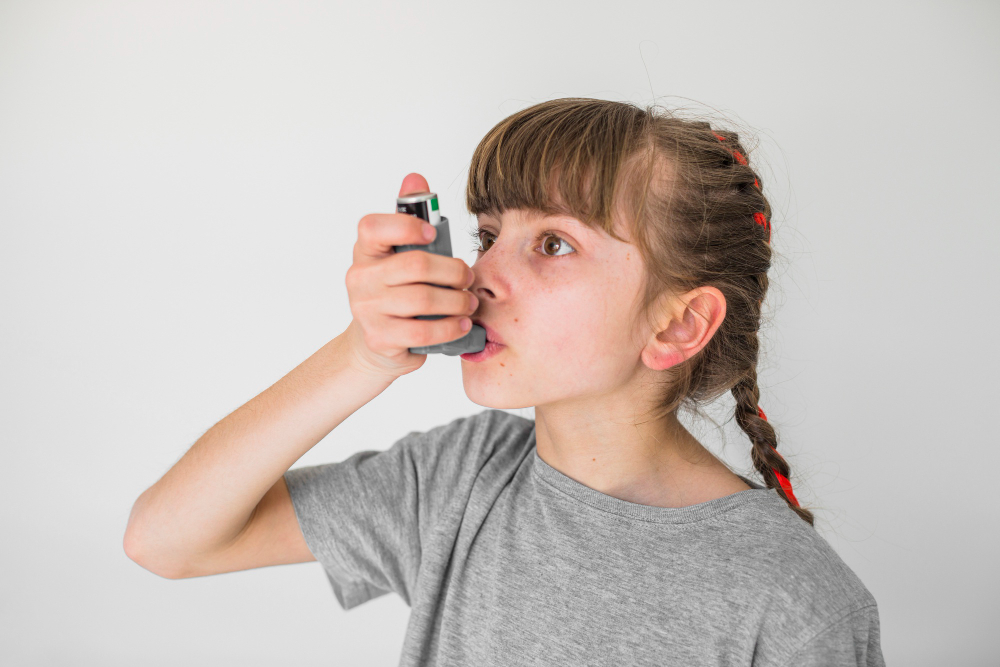
Asthma in children is a common lung condition that makes it hard for kids to breathe. It often starts in early childhood. Because asthma in children can affect daily life, it is important for parents to know the signs, causes, and ways to manage it. Early care and the right treatment can help children live healthy, active lives.
What is Asthma in Children?
Asthma in children is a long-term condition that causes the airways in the lungs to swell and narrow. As a result, children may have trouble breathing. The airways become sensitive to things like dust, pollen, or cold air. When these triggers are present, the airways tighten, making it hard for air to move in and out. According to the Centers for Disease Control and Prevention (CDC), asthma is one of the most common chronic diseases in children.
Common Symptoms of Childhood Asthma
Children with asthma may show different symptoms. However, some signs are more common. Early recognition helps with quick treatment. Look for these symptoms:
Sometimes, symptoms get worse with colds or allergies. If you notice these signs often, it may be time to see a doctor.
Causes and Risk Factors
While the exact cause of asthma in children is not fully known, several factors can increase the risk. For example, a family history of asthma or allergies makes it more likely. Other risk factors include:
Additionally, some children have sensitive airways that react to triggers like exercise, cold air, or strong smells. Knowing these risk factors can help parents take steps to reduce them.
How is Asthma Diagnosed in Children?
Doctors use several methods to diagnose asthma in children. First, they ask about symptoms and family history. Next, they may listen to your child’s breathing. In many cases, doctors use tests to measure how well the lungs work. For example, a spirometry test checks how much air your child can breathe out. Sometimes, doctors may try asthma medicines to see if symptoms improve. According to the American Academy of Pediatrics, early diagnosis helps with better childhood asthma management.
Treatment Options for Childhood Asthma
Treating asthma in children involves both daily care and quick relief during attacks. The main goals are to control symptoms and prevent flare-ups. Common pediatric asthma treatments include:
Doctors will create a plan that fits your child’s needs. With the right care, most children can join in normal activities.
Lifestyle Tips and Home Care
Managing asthma at home is important for every family. Therefore, parents should learn about asthma triggers in kids and how to avoid them. Here are some helpful tips:
Additionally, always have your child’s asthma action plan ready. Teach your child how to use inhalers or other medicines. With good home care, children can avoid many asthma attacks.
Prevention and When to See a Doctor
While asthma cannot always be prevented, you can lower the risk of flare-ups. For instance, avoid known triggers and keep up with regular doctor visits. Make sure your child takes medicines as prescribed. If your child has trouble breathing, wheezes often, or needs quick-relief medicine more than twice a week, see a doctor at Starlings Children’s Hospital. In emergencies, such as severe trouble breathing or blue lips, seek help right away. Early action keeps children safe and healthy.
In summary, asthma in children can be managed with the right care and support. For the best results, consult Starlings Children’s Hospital for personalized advice on managing asthma in children.